


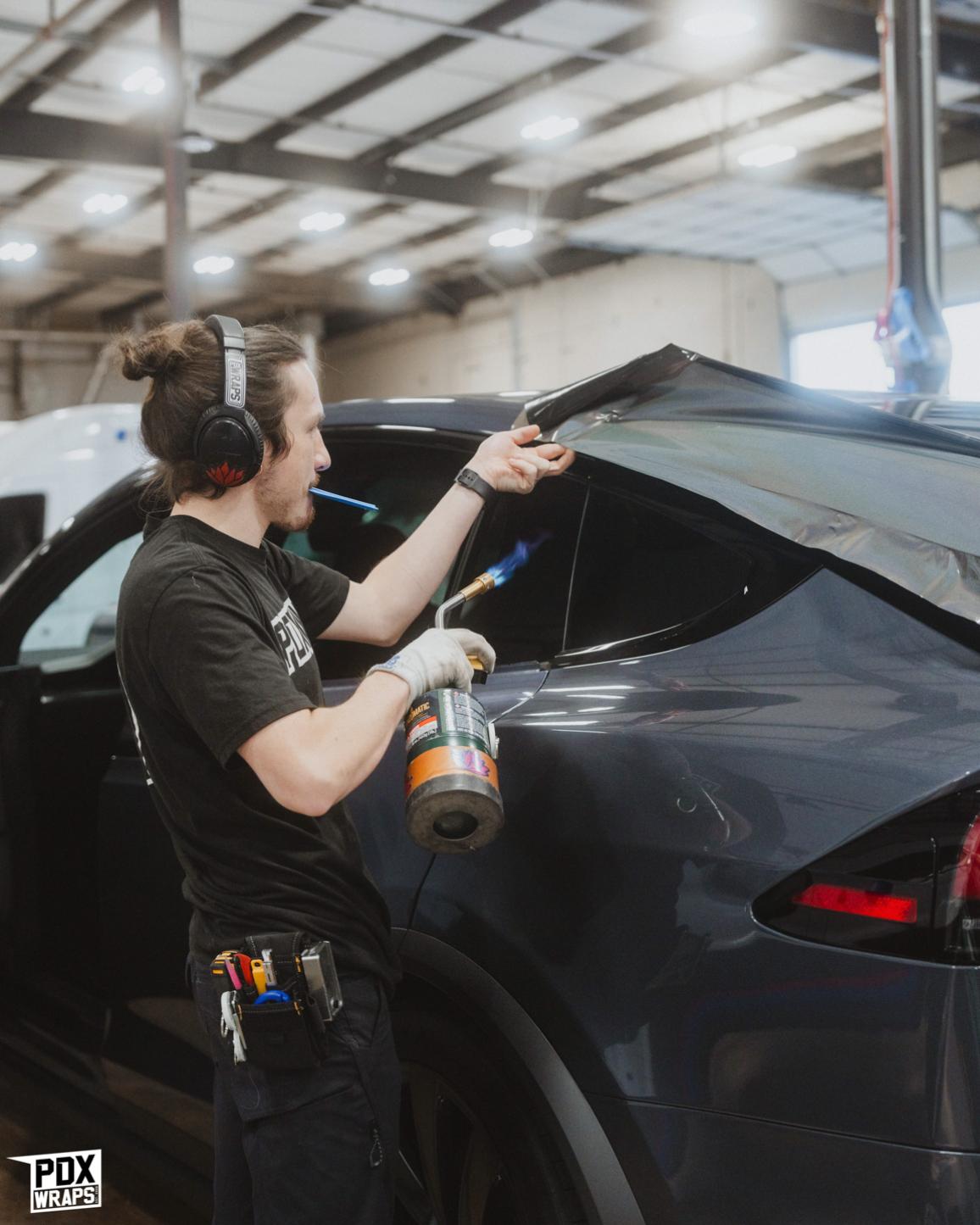
How Dark Can You Tint Your Windows in Oregon?
Understanding Oregon window tint laws can help you choose the right film while avoiding compliance problems. Learn about VLT requirements, window-specific rules, medical exemptions, and the documentation you may need after installation.


Planning to tint your vehicle in Oregon? Before choosing a darker film, understand the state's requirements for light transmission, different vehicle windows, reflective materials, and medical exemptions. PDX Wraps can help you explore your window tint options and choose a film that fits your vehicle and preferences while meeting Oregon's requirements. The rules below come from ORS 815.221, Oregon’s window tint statute.
Understanding Oregon Window Tint VLT Requirements
Visible Light Transmission (VLT) measures how much light passes through a window, including the glass itself and any applied tint. Oregon actually checks VLT in two ways on side and rear windows.
First, the film must let at least 50% of visible light through. Second, once the film is on the glass, the whole window has to let at least 35% through. The pre-existing glass affects the result; therefore, the film’s VLT value may not match the final result.
That’s why a film labeled 50% can still end up below 35% on some vehicles, and why it’s worth having a professional measure the finished window.
Oregon Tint Limits by Window
For Cars and Coupes:
-
Windshield: tint only allowed on the top 6 inches
-
Front side windows: film must let 50% or more light through, and the finished window 35% or more
-
Rear side windows: same as the front side windows
-
Back window: same as the front side windows
For Qualifying SUVs, Trucks, and Vans:
-
Windshield: tint allowed on the top 6 inches only
-
Front side windows: film must let 50% or more light through, and the finished window 35% or more
-
Rear side windows and back window: darker tint allowed, as long as the vehicle has side mirrors on both sides
-
On every vehicle, tint on the side and rear windows can’t reflect more than 13% of light.
Tint Limits for the Windshield and Windows Behind the Driver
Oregon tint laws differ by window and vehicle type. The top six inches of the windshield may be tinted, but tint isn’t allowed anywhere else on the windshield.
Multipurpose passenger vehicles, which include most SUVs, pickups, and vans, may use darker tint on every window behind the driver if they have outside rear-view mirrors on both sides. Under the statute, a multipurpose passenger vehicle is one designed to carry 10 or fewer people that is built on a truck chassis or has features for occasional off-road use. The front side windows on these vehicles still have to follow the standard rules.
Some SUVs and trucks also come from the factory with dark “privacy glass” on the back windows. That factory glass (known as AS-3 glass) doesn’t have a light transmission requirement under Oregon law, so it’s treated differently from aftermarket film. Knowing what applies to each window will help you select a suitable film for your car.
Are Reflective Window Tints Allowed in Oregon?
Oregon prohibits mirror-finish tinting materials, and any film on your side or rear windows can reflect no more than 13% of light. The law also bans red, gold, yellow, amber, and black tinting material. The law also prohibits tinting materials that are applied in liquid form by brushing or spraying. If you want heat reduction, glare control, privacy, or a darker appearance, choose a film that provides those benefits without prohibited materials. All three 3M automotive films we install, Obsidian, Color Stable IR, and Ceramic IR, come in shades that can meet Oregon’s requirements. We’ll help you pick one that works for your vehicle.
Medical Exemptions for Window Tint
Oregon does allow darker tint for medical reasons. You’ll need a signed note from a licensed physician or optometrist saying that you, or someone you live with, has a condition that requires it. With that, your side and rear windows can go darker than the usual limit, but the windshield still has to follow the standard rule. We’d recommend keeping a copy of that note in the glove box.
Your Oregon Tint Certificate
Here’s a part of the law a lot of drivers have never heard of. Whoever installs your tint is supposed to give you a certificate when they’re done. It shows who did the work, how much light the film lets through, and how reflective it is. It also confirms each window still lets in at least 35% of light. Oregon wants you to keep that paper in your car, and if you ever get pulled over and the officer asks about your windows, that’s what you’d hand them. We’ve heard from customers who were never given one by their last shop. When you tint with us, the certificate comes with your keys.
What Happens If Your Window Tint Is Too Dark?
Window tint that does not meet Oregon’s requirements can result in a citation and may require removal or modification. Oregon’s law applies both to whoever installed the illegal tint and to anyone driving an Oregon-registered vehicle with it. If you are unsure whether your current tint meets the requirements, having the finished windows measured can help determine their total light transmission. This is especially helpful if you buy a vehicle that already has tint installed in another state.
How to Choose Window Tint That Meets Oregon Requirements
The darkest legal tint isn’t always the best choice. When making your selection, consider your car, the windows you want to tint, the glass you have, and your end VLT needs. If heat is your main concern, the film type matters more than the shade. 3M Ceramic IR, for example, is designed to reject heat even at the lighter shades Oregon requires on most car windows. For more on what tint can do for your car, check out 5 Benefits of Car Window Tinting in Oregon.
Get Professional Window Tint Installation From PDX Wraps
Window tint can make your vehicle more comfortable, better looking, and more private without breaking Oregon’s window tinting laws. The experts at PDX Wraps will tint your windows professionally and help you choose a film and shade that’s legal for your vehicle. Learn more about our automotive window tinting services, or contact us to get a quote.
This article is for general information and isn’t legal advice. Tint laws can change, so check the current version of ORS 815.221 or ask your installer if you’re unsure. Last updated October 2026.

